Showing posts with label Going Out. Show all posts

Sunday, June 5, 2011

Expats Meet Dutchies..... Dutchies Meet Expats: A Family Picnic 12 June

My blog post about the survey that implies the Netherlands is an expat unfriendly country hit a nerve with many of you - especially when it came to the subject of making local friends.

So on this note.. I thought I would share an event with you which is designed to help you meet local Dutch people and vice versa.

On Sunday 12 June, Expat Buddy is organising an "A Family Picnic Affair" in Westerpark in Amsterdam. It starts at 2pm and finishes at 5pm. Bring the kids, a picnic basket and something to sit on and wile the afternoon away in the company of Dutchies and Expats. There's lots of information in the flyer below - and you can find details on www.xllentguidance.com


ExpatBuddy's concept is "We are your temporary best friend" for the difficult period just after your relocation, focusing on the social and emotional distress of moving and making sure expats and their families have someone to support them finding their way around - a network, jobs, recruitment, lifestyle, neighborhood etc. In short, ExpatBuddy.nl is an aftercare service provider.

The company also organises HRM Expat knowledge sessions to create awareness about the emotional state of mind of expats and spouses after relocating - something international companies could certainly benefit from if expat surveys are anything to go by.

So put it in your diary - and maybe I'll see you there next Sunday!

Wednesday, May 18, 2011

"Day of the Park" in the Netherlands

Enjoy the Greenery in your Local Park
(c) The Writing Well
Sunday May 29th is "Dag van het Park" - it's a nationwide event to bring attention to the greenery in your town. The ANWB, local councils and volunteers work together to ensure that your local park looks its best and puts on a host of activities suitable for all.

This is the seventh year the event will take place and the theme for 2011 is "Op avontuur" and suggestions for activities include GPS walks, tree climbing, treasure hunts, survival, hut building - all things sure to get young and old interested.

To find out what is going on in your local park, visit the website

Sunday, February 27, 2011

Michelin Stars in the Netherlands

Photo: Noel Abejo
Forget bitterballen and kipcorns.... there is much more to eating out in the Netherlands. Inspired by my recent post about Top Chef I delved in to the topic of Michelin star restuarants in the Netherlands and was surprised by the sheer number scattered across this small country.

There are two restaurants in the Netherlands who have the prestige award of three Michelin stars" Oud Sluis in Sluis, Zeeland (also voted best restaurant in the Netherlands) and De Librije in Zwolle (which was featured on BBC's Masterchef last year). Both restaurants and menus look good, though your wallet does need to be quite full.......

There are 13 two star restaurants spread across the country and 83 three star establishments - you can find a complete list on dinnersite.nl.

In 2009, I wrote about a restaurant in Limburg which actually gave back its Michelin star as it was keeping customers away. Now known as Eten bij Michel, the restaurant underwent a redesign and provides affordable good food in a relaxing atmosphere, if the reviews are anything to go by.

Where ever you live in the Netherlands, there is sure to be a Michelin star restaurant near you... as long as they don't keep giving them back of course!

Friday, November 5, 2010

Bonfire Night - Thwarting An Early Terrorist Threat

Wrapped up in woollen scarves, hats and gloves we would stand excitedly in the dark waiting for the lighting of the bonfire; for the moment when the flames would spring in to life and the wood would start to crackle, for the moment that we could feel the heat on our cold, red cheeks. The guy perched at the top of the fire would eventually fall and burn, the effort of making the figure disappearing literally in a puff of smoke.

Once the bonfire was in full flame, we would turn our excitement to the fireworks which would be next to start. In the meantime we warmed ourselves and filled our tummies with soup, a jacket potato or a hot dog or hamburger.

Then the firework display would start and the crowd would "ooh" and "aahhhh" in unison as Catherine Wheels spun, spider fireworks trailed their orange legs across the dark, starry sky and Roman Candles sent shooting stars heaven bound. We would wave our sparklers around, writing our names in light. The bangs, whistles, screeches and crackles echoed across each other as the firework show came to its finale.

Bonfire night every 5th November sticks with me, the date holding a feast of childhood memories like a t box of treasures I can open every year on this day. Of course, since I moved to the Netherlands participating in Bonfire night has become harder and I have only been in the UK to celebrate 5th November twice since 2000. As my children grow up this is a track record I aim to change so that they can learn and take part in a little piece of British history and culture. For Bonfire night is a British thing - yes, I have had lots of people back home saying to me over the years "Don't they celebrate bonfire night in Holland then?" No they don't. Of course they don't - Guy Fawkes made no attempt to blow up the Dutch parliament did he?

But he did have a cunning plan to get rid of the protestant monarch of the time by blowing up Parliament and King James I with it in 1605. The aim was to replace the head of state with a catholic one. Luckily for King James I the gunpowder plot was discovered (the anti-terrorist unit being on full alert back then too by all accounts) and the plotters were arrested and swiftly executed. End of Guy Fawkes and his friends.

On 5th November, 1605 the first 'thanksgiving' was celebrated and marked with the ringing of church bells and the lighting of bonfires. Hence, why the British, over 400 years later, still light bonfires on 5th November and put an effigy (the guy, named after Guy Fawkes) on top of the fire. The fireworks represent the foiled gunpowder plot - that and it's pretty.......

If you live in the Netherlands and want to experience Bonfire Night get yourself over to Watersportcentrum, Sloterplas,Christoffel Plantijngracht 4, 1065 DA Amsterdam at 16.00 on Sunday 7th November, where the British Society is once more organising its Guy Fawkes Bonfire event.

Sunday, September 26, 2010

Eight Tips Series: Driving

There are tricks for getting safely from A to B on the roadways of the Netherlands. It may seem like the rules of the road are self explanatory and easy to follow but often they are not quite as they seem. Here are eight tips to help you drive around this little Dutch nation.

1. Changing Your Driving Licence
There comes a time when your home nation driving licence just isn't valid anymore to drive in the Netherlands. For some nationalities, this means taking a Dutch driving test.  If this applies to you, don't worry. Judging by the driving habits of the rest of the nation, it really can't be that hard.

For others, it is simply a case of swapping once licence for another as is the case with the Brits. Interestingly, swapping a British licence to a Dutch one gives you the right to drive many more (heavy) vehicles than your average Dutchman. Don't ask me why but I can pretty much drive a juggernaut here but my husband can't - he would have to take a separate test for that. So you do need to be careful as you could be the one called upon to drive the school bus / sports mini bus/ freight lorry if you are out and about with your Dutch friends.

2. They're Traffic Lights but not as We Know Them
The colours are the same: red, yellow (or amber if you want to be pedantic) and green but they mean different things.

  • A traffic light that is turning to red means put the gas pedal to the floor and GO GO GO because you can easily make it before it turns really red. If you stop at a traffic light as it turns from amber to red, expect to get beeped at by the car(s) behind.
  • If a traffic light is amber it means speed up, you can easily make it before it turns red.
  • A green traffic light means go, if you have bothered to stop in the first place.

3. Speed Limits Don't Apply to Everyone
If you choose to drive at 120km on the motorway in the fast lane, don't be suprised to see that you pick up an assortment of "trailers" on your journey. Whilst bumperkleven (tailgating) is illegal in the Netherlands it proves no deterrent for Dutch drivers and the fight for space in this little land is no more apparant than on the third lane of the nation's highways. In fact, the Dutch are trying to get bumperkleven classified as an Olympic sport to improve their gold medal tally.

When roadworks are being carried out on the motorway, and a temporary speed limit is in place do not make a mental note to take your car in to the garage to have your speedometer checked. It's fine. Really. It's just that the lower speed limit only applies to you and not to other drivers on the road.

4. Make Someone's Day at a Zebra Crossing
When you stop at a zebra crossing to allow a pedestrian to cross, expect a look of surprise on the faces of those waiting; they never expected you to stop so you have just made their day.

5. There are More than Cars on the Road
At a junction, the absence of cars or pedestrians nearby does not mean it is safe to pull out or turn; watch out for buses, trams and cycles as they can easily come out of nowhere and usually have priority.

If you have to make an emergency manoever to avoid that something hits you, and you hit your horn as a warning or in frustration or anger, expect the middle finger. It does not matter that they have almost hit your car, or that you have had to use all your driving know-how to avoid a collision - you have no right to beep at the offender.

6. Right has Priority
If there are no clear markings on the road, then any road turning onto the road you are on from the right has priority. This means that cars may pull out in front of you from the right and they DO actually have right of way, though it might seem like anti-social driving to you. Do not shout, blaspheme or stick your middle finger up. It's not nice.

7. Roundabout Etiquette
Do not wait for Dutch drivers to signal on the roundabouts. You must guess when they will turn off - it is a sort of national game. You must also pull out on to the roundabout even when it looks like you don't have enough time to do so safely. Someone will eventually stop for you. Or in the back of you.

8. Cars do not Float
Even if you have not been in the Netherlands very long you have probably noticed there is a fair bit of water around in the form of canals, rivers and lakes. Oh, and the sea. Be careful when you are parking in the narrow spaces near the water - like is typical in Amsterdam and Leiden. There are rarely barriers and it is a harrowing drop down to the water if you don't brake in time. It is not just shopping trolleys and bikes that are fished out of Holland's waterways.

Sunday, August 29, 2010

Eight Tips Series: Using Public Transport

Photo: Jop Quirindongo
The public transport system in the Netherlands is in general good. There are buses, trams, metros and trains to help you make your way across the length and breadth of this small nation. But what do I know? I grew up with British Rail so anything seems good in comparison.

1. Don't Bother with the Strippenkaart
It is being phased out (and already obsolete in some of the bigger cities). It is one of the most convoluted elements about travelling on public transport in the Netherlands. You need to know how many zones you are travelling (and then add one, double it, half it and guess which number I first thought of) to pre-stamp the paper strip; if you can even find it again after your last journey and it isn't in at least two pieces because you have to continually fold it to get it in your purse/wallet/handbag/pocket. Thankfully it is a dying breed.

2. Allow Plenty of Time
A 15 minute car journey will take you at least an hour with public transport. Enough said.

3. Learn Useful Local Phrases
If you are going to regularly travel by train, bus, tram or metro it would be handy if you learned how to say "Please could you move your bag from that seat so I can sit down." The answer will be rolling eyes, tutting or even "Nee," so be sure to take an assertiveness training course before ditching your car for public transport.

4. Accept You are Not Special
Being pregnant and the size of a baby elephant is no reason to expect anyone to give up their seat for you. Being old is something you need to live with and again no reason to object to standing for your entire journey. If you are feeling faint this is also a poor excuse to ask for a seat (but no worries because the sheer volume of the crowd will keep you upright). That healthy looking teenager blaring on his mobile phone and sharing the noise on his MP3 player with the entire carriage needs that seat more than you ever could.

5. Bear in Mind the Season You are Travelling in
If it is autumn there could be the wrong type of leaves on the tracks (nope, not only England has the wrong leaves) and in winter, snow and ice stop any kind of movement on the rail tracks and tram lines. Oh and the roads of course. If it is icy you need to cycle or sled to work/school/shops.

6. Hold On
Bus drivers, particularly those taking you down a motorway to your intended destination, do not factor in  that you as a passenger are without a seatbelt or are standing with little or no support in the aisle because the bus is full. Full twice over in fact. Note that you can also be upended by a tram pulling into a tram stop. Hold on tight.

7. Listen
If you hear a tram bell - MOVE OUT OF THE WAY. A tram will not stop or slow down for you. If you refuse to move you and/or your bike will end up wrapped around the front end of the tram and much screaming and shouting in Dutch will ensue. The bell means business so listen out for it.

Parking a bike in the Netherlands is easier than riding one
8. Buy a Bike
To be honest, if the journey you are regularly undertaking is less than 10km away, buying a bike may be your best option. Bikes are cheap, cycle lanes and parking are aplenty and routes are well signposted. Cycling with the Dutch is not without risk of course... but that's a topic for another day.

Monday, August 23, 2010

English Language Theatre in the Netherlands - Open Air Performances

Despite the atrocious weather (it can only get better right?) I wanted to do a quick post about the British open-air theatre company which is back in the Netherlands. I went to a performance a few years back in Voorschoten and it was fabulous.

So if you fancy an English language performance and Romeo and Juliet or James and the Giant Peach appeal, check out Illryia and book your seat (which you take with you). You can even order picnic hampers for the plays in Voorschoten.

Sunday, August 22, 2010

Eight Tips Series: Getting to Grips with Dutch Food

Dutch food is not like anything you have eaten before. Of that I am sure. Here's the low down of some typical Dutch food and how to survive it.

1. Lower Expectations
If you don't expect much, you won't be disappointed. Typical Dutch food is not haute cuisine. It is not fine dining. In fact, some might say it's hardly dining at all.

2. The Straw Rule
Most Dutch food can be eaten through a straw; pea soup (or snert as it is also known) is the ultimate example, though I do grant you that sucking up the lumps of sausage will need some gusto, and could be a choking hazard. The other great example is stamppot, which is basically mashed up potato with a vegetable of your choice (so long as the vegetable has had the life mashed out of it too). The fact that you could eat it through a straw does not mean that you should (unless you are convalescing in hospital).

Friet or patat: chips are a winner in the Netherlands
3. Get Frying
A lot of frying is done in the Netherlands. A lot. 'Snacks' are a unique type of fast food found floating in fryers across the country, usually served with the infamous friet or patat (that's fries or chips to you and me). Snacks include things like kipcorn, frikandel, bitterbal, bami and kroket. 

It is actually best not to ask what is in your snack - you don't want to know. It's the reason why snacks are served with more sauce than you know what to do with.

The traditional food at New Year is also a deep fried delicacy - oliebollen - just as its name suggests (oil balls).

Traditional Dutch cakes eaten at New Year
Photo: Baris Wanschers
4. Ditch the Cutlery
The Dutch eat quite a bit with their hands. For example, no knives and forks are needed for traditional 'snacks' or frietjes, despite the lashings of sauce (see Tip 5). Abandon the metal tools and get stuck in.

5. Get Saucy
The Dutch are masters of sauces. Not the 'Gordon Ramsay homemade quality' variety, but the 'out of a plastic bottle' variety. We are talking about frietssaus (especially to put on your chips), currysaus (not the same curry sauce you get in British fish and chip shops), satesauschillisaus, knoflooksaus (garlic sauce),  shoarmasaus (hot garlic sauce to go with shoarma) and mayonaise

6. Learn to Love it Hot and Strong
Drinking coffee is a Dutch pastime and for those who like their coffee bordering on coloured water, you are in for a shock. The Dutch tend to like their coffee strong. In addition, when the Dutch have white coffee they tend to use koffiemelk (evaporated milk) or koffiecreamer and not the regular stuff from a cow like many Brits. 

Drinking tea in the Netherlands is also an experience for Brits who put milk in their tea (yes, I know!). The Dutch look blankly at you if you ask for milk for in your tea (rightly so, in my humble opinion but my English visitors do put milk in their tea and it has led to some interesting discussions out and about). You may end up using creamer or koffiemelk. Either way, it doesn't make for a 'nice cup 'o tea" as the folk starring in English soaps would say.

Dinner or Dessert?
7. The Dutch Like it Flat
Like the country they live in, some favourite Dutch food is flat. Pancake houses are everywhere and are wildly popular. Pancakes come in all sorts of varieties - sweet, savoury and everything in between. They even come in different sizes - poffertjes are mini pancakes and you can buy poffertje pans if you want to make your own. 

The thing is that dinner in a pancake restaurant quite often results in a meal of pancake covered in sugar and syrup. Not a vegetable in sight. This is what I actually call pudding or dessert........ and I am told I am wrong - it is simply a dinner that is a treat. My tip is to eat dinner before you head out and grab pudding in the pannenkoekenhuis unless you plan to take a savoury pancake, which by the way really are very good.

8. Take up Jogging
Aside from all the deep fried food and the pancakes I have mentioned, there is also a lot of sweet food on the Dutch menu, especially when it comes to celebrating. For birthdays there is the usual birthday cake (if you are lucky), for a birth there is beschuit met muisjes (meaning literally biscuits with little mice; in reality a round, dry, crunchy cracker with blue or pink sugar coated anise seeds), for new year oliebollen and appelflappen are all the rage and a simple coffee with the neighbour is usually accompanied by some kind of sweet treat. It all starts to take its toll on the hips. And thighs. And rear end. So taking up jogging, aerobics or zumba is a good idea. The alternative is to hide away in your house and quit socialising.

Sunday, August 15, 2010

Eight Tips Series: Dining Out

Photo:Lewis Johnston
Here are eight tips to get the most out of your dining out experience in the Netherlands.

1. Don't Ask to Sit in a Quiet Part of the Restaurant
This is a selfish request so please don't make it. It requires the waiting staff to walk further than strictly necessary to serve you. Sit with the crowd and enjoy your meal. In fact, most of the Dutch clientele think it is gezellig to seat themselves at the table positioned 10 centimetres from yours, despite you being the only customers in the restaurant. Squeezing past each other's chairs to visit the toilets is a kind of national pastime.

2. Expect to Take Your Time
Don't expect to grab a quick meal and head off somewhere else. If you want quick, try Mcdonalds or Burger King (and even then you might be pushing your luck). The ordering process, as well as the delivery times of your meal to your table is at best 'relaxed' in many Dutch eating establishments.

3. Get Your Drinks Order in Whilst you Can
You just never know when you will be able to attract your server's attention again to get a second drink. People have died of thirst trying.

4. Enjoy the Overview
Don't have high expectations that glasses and bottles will be cleared away as you empty them. That is needless extra work for the serving staff. Relish the challenge of creatively rearranging your table at every course to ensure you can fit your food on the table. Think about stacking high, as well as across the table, and don't be afraid to extend to the Dutch group's table next to you - they wanted your company after all. Look on the bright side - you can easily keep track of your alcohol consumption this way.

Photo: Stefan Gustafsson 
5. The Two Finger Rule
When you order a beer from the tap, your glass will comprise 2/3 foam and 1/3 beer. It should of course be the other way round with only two finger's worth of foam at the top of your glass. However, this is more fiction than fact. Live with it and order three beers at once.

6. Let Staff Know if Your Meal is Cold or Undercooked
If you are not happy with the temperature of your meal, or the degree to which it is cooked, start trying to attract your waiter to let them know. They will gladly (read: with rolling eyes) take your plate back to the kitchen to deal with the offending item by blasting it in the microwave and then returning it to you on the same plate that was taken away from you 15 minutes previously. Yes, your salad will also have been nuked.

7. Use Your Feet to Get the Bill
You may notice that most Dutch customers get up from their tables and make their way to the till at the end of the meal; this is because they know. They know there is no point sitting and waiting and trying to get a waiter's attention to get the bill. And in any case, if you are lucky enough to attract enough attention to ask for the bill, this is just step one of three. Getting the bill to your table is trickier than asking for it, and getting your money or card processed is even harder. You could be there hours, by which time it is time for your next meal.

8. Tip
Yes, the service may have been slow, your table a mess throughout the entire meal and you used your feet to get the bill paid but you are still expected to leave a tip for your waiter or waitress. They were in the restaurant whilst you ate weren't they?

Of course, there are actually great places to eat in the Netherlands, where service excels and the food is scrumptious - check out the list on the Smaak Politie site for good, clean places. Top notch Michelin star restaurants are also available such as De Librije which was featured on the last series of Master Chef shown on the BBC - if anyone has actually been there let us know how it was!

Wednesday, August 4, 2010

Celebrate Amsterdam Pride


Photo: Mariana Coan

This week marks Gay Pride week in Amsterdam. The largest gay event in the Netherlands is celebrated in the Dutch capital with a host of events, culminating on Saturday for the fifteenth time with the world famous boat parade along Amsterdam's canals. The theme for this year's event is "celebrate".

During the week, film, art, poetry, sporting and theatre events are held. You can take a tour around Amsterdam and learn about the city's historical relationship with homosexuality. You can enjoy a special meal, BBQ, picnic or cocktail event or visit an exhibition, join any number of parties going on or take part in a debate or dance workshop. The events are numerous and varied to say the least. There are also many events linked to Europe and Africa Pride. For a full program of events and a map  visit We Are Proud.

As the week's highlight, and for the second time in just a few weeks, the capital's canals or grachten will host a lively, colourful, well-visited event - the last time being less than a month ago when the Dutch football team came home to an "almost" victory parade

This Saturday (7 August) 80 festively decorated boats will travel along the canals, carrying party-goers representing more than 175 companies and organisations. The event is one of the biggest of the year in Amsterdam, and has earned the Dutch city the title of "Gay Capital".

Photo: Karsten Qualmann
New this year leading the boat parade is the 'Europe Pride' boat. The boat will carry an orchestra playing the European anthem as well as members of the European Parliament. The European Union is committed to stamping out discrimination based on sexual orientation, and a highly visible participation in such a huge event is a manifestation of this.

The 'African Pride' boat is also new. The addition of the African contingent is significant; in many African countries homosexuality is still seen as a crime. Frank van Dalen, chairman of the organising group (ProGay) explains: 
  "In recent years in Africa it has not got any easier for homos, lesbians or transsexuals. With African Pride we shall show that homosexuality does exist in Africa and that it is not Western fiction or a dangerous export product. We want to show the gay community in Africa that they can count on our solidarity."

All of the boats will leave Westerdok at 14.00 and travel via Prinsengracht to the Amstel. The parade will be watched by up to half a million visitors who usually line Amsterdam's picturesque waterways.

During the day (and stretching well into the evening and night) there are also various events taking place on podia scattered across the capital, as well as in gay bars and on the streets.

The event is a symbol of the struggle that homosexuals have endured to be open about their sexuality, and this week is a chance to be visible and celebrate tolerance - not just within the gay community but the straight too. 

Frank van Dalen says "The combination of party, culture and emancipation makes this event one of a kind."

The event is free and if you are travelling from outside of Amsterdam, you may want to spend much more than one day in the capital city. Hotels are widely available across Amsterdam (including gay friendly accommodation) and you can also save money on your hotel booking with http://www.vouchercodes.co.uk/hotels.com who are currently offering a 10% discount on all hotels booked at hotels.com.

Wednesday, June 30, 2010

Dutchies Meet Expats - Family Picnic 7 July in Amsterdam

If you have no plans for 7 July, then pack up your picnic basket, grab a blanket and head over to Westerpark in Amsterdam for the first expats and Dutchies picnic. See the flyers below for more details. For any questions, please contact Lexia (her details are below).


Wednesday, June 16, 2010

Veterans Day in the Netherlands: 26 June

The annual day of honour to the military personnel of the Netherlands takes place on Saturday 26 June for the sixth year. The event takes a look at Dutch military through the years, as well as highlighting the current peace missions around the world involving the Dutch.

The main event takes place in The Hague with Prince Willem Alexander leading a parade of 3,500 military personnel and veterans through the city. There will be a fly over (good to see from the Malieveld) and a stage hosting musical acts throughout the afternoon. The police also give demonstrations there, and every type of military vehicle is available for a good look over.

I have attended this event twice now and it is definitely worth a trip out to experience the atmosphere of the day, particularly if you have a little boy or two in your family!

You can find out more, including the route parade and timing and location of events on the website http://www.veteranendag.nl/n/6/Home.html

Sunday, March 28, 2010

Dining Dutch Dogs

We recently went to a pancake house in Katwijk, only to leave with more than we came in with; namely a coat full of dog hair. My husband had placed his coat on the bench next to us, not knowing that some previous diner had obviously thought it appropriate to seat their dog at the table with them.

Many a time I have been in a restaurant here and have sat eating my meal with the rear end of a dog staring at me from under the next table, and even after nearly ten years in the Netherlands this never fails to amaze and irritate me.

In England, in general, the only dogs allowed into eating places, and shops for that matter, are guide dogs, despite the fact that there is officially no law banning dogs from being in restaurants. In many US states, dogs are also not allowed in restaurants but recent new legislation allows them to sit quietly with their owners on outside terraces. It is a very different attitude to mainland Europe.

Here in the Netherlands there are no rules (either real or customary) on where you can take your dog in terms of dining out and people make the most of that. In some cases, it really would not surprise me if the owner settled their dog on a chair, tied a napkin round its neck and ordered from the menu for it - that is how far some dogs seem to be part of the family here......

What do you think about dogs sitting in restaurants? Is it different here to your experiences back home?

Tuesday, March 23, 2010

Keukenhof - The Garden of Holland

Imagine a garden as far as the eye can see, a garden adorned with every colour you can imagine, with every type of flower you could hope to set eyes on. Picture a garden so perfectly landscaped you have to pinch yourself to make sure you are not imagining it.
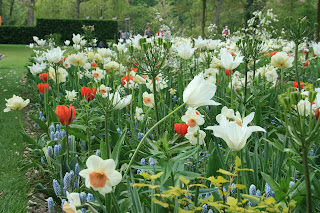
Welcome to the Keukenhof in Lisse, the most popular tourist attraction in the Netherlands and home to the most famous garden in the world (probably...). It opened its gates to the public last week and remains open until16 May.

It's not just about flowers though; there are water features, art displays, themed gardens, parades, sculptures, exhibitions and special events. In short, more than enough to do and see and hard to fit in to a one day visit.

Each year there is a unique theme that encompasses Keukenhof, and this year it is centred around "From Russia With Love", honouring the wonders that Russia has to offer: Russian dolls, ballet, landscapes, gardens, animals and even an old Russian army bike.

If you are yet to visit these gardens, then make this the year you do. You can order tickets online to help bypass some of the queues (it is a very popular tourist destination so also great for people watching...). I can guarantee you won't regret a trip to Keukenhof!

Sunday, March 7, 2010

The Dutch Taste Police

We went to a local Greek restaurant (Delphi) last weekend and I noticed a Smaakpolitie sticker on the door. It is the only restaurant in Zoetermeer to have been awarded this sign of a good, clean kitchen. In fact, to be fair there are not too many restaurants that have been awarded this keurmerk in Zuid-Holland at all.

The Smaakpolitie is a Dutch television programme hosted by Rotterdammer Rob Geus, which inspects restaurant, cafe and snack bar kitchens (and student houses for entertainment value) around the country. Rob (always clad in his trusty white jacket) checks the hygiene and cleanliness of each kitchen he visits - giving it a very thorough going over. Some of what he finds is shocking, and if you saw the state of some of the fat in some snack bar deep fat fryers, you would never eat a kipcorn again....... Of course, some kitchens sparkle and shine, and the kitchen staff do no wrong... and of course these are the places you need to find to dine out in!

Here is a sample of Rob in action: Horror in Wageningen


To see which restaurants in your area have Rob Geus' approval see the total list on SBS6's website (clickable regions on the left).

Wednesday, February 17, 2010

Next "Swap and the City" Event - March 14 in Amsterdam

The next Swap and the City event will take place on March 14 in Amsterdam so if you are looking for a new, exciting and social way to freshen up your wardrobe then check out www.swapandthecity.com or read my article "Swap Till You Drop in Amsterdam" on Expatica.

You can also watch footage of the last Amsterdam event.


Thursday, November 19, 2009

Swap ‘Til You Drop in Amsterdam

Clothes swapping events have spread like wild fire across the United States and are all the rage in London; Amsterdam is the latest city to catch the clothes swapping fever. If you like the idea of refreshing your wardrobe in a party atmosphere in a manner that is good for the environment, good for your pocket and helps a local charity, then the “Swap and the City” event is just for you.

From private clothes swapping parties to major events in international capital cities and the growth of specialised internet sites, the trend to swap clothes instead of throwing them out has grown in popularity. Of course, internet sites such as eBay have been prime places to sell unwanted clothes for some time now, but swapping events add a more personal element to getting rid of unused garments.

Swapping clothes, instead of disposing of them, is also more in line with our desire to see items recycled and reused. We are a generation more and more concerned about the world we live in, eager to reduce our carbon footprint where we can. We are more conscious of the effects we have on the environment, but these are often ideals that conflict with today’s disposable and ever-changing fashion trends. Whilst we are used to recycling glass, cans, paper, and plastic, clothes are often thrown out without a second thought about the environmental impact this has, with only a small percentage of used clothes even reaching charities. Ensuring clothes enjoy a longer life is one small way of reducing the environmental impact of the clothing industry.

“The idea of a clothing swap isn't a new one, however, I wanted to create a fun afternoon out for women in the Amsterdam area, around the theme of fashion, beauty and charity. I am passionate about the idea of green fashion: clothing nowadays has become disposable, but with “Swap and the City” perfectly good quality clothing finds a new home rather than gathering dust at the back of a closet or being dumped in a landfill,” explains Colleen Geske, who is co-organising the event with Tamara Raab.

The design of the Swap and the City event in Amsterdam to be held on 29 November is simple. In every woman’s wardrobe there is a long forgotten dress; an abandoned skirt confined to the depths of the clothes cupboard that looked great on the rack but which never quite made the grade back home; or boots that seemed perfect in the shop but which crushed your feet if you actually walked in them - each participant brings a minimum of five such items to the party, and leaves with as many items as they like. Shoes, clothes, jewellery and purses are all swappable as long as they are in great condition.

However, it is not just about swapping clothes; fun, beauty and socialising are also on the agenda.

News of this first event has been greeted enthusiastically, and a follow up for early next year is already in the planning. Colleen reveals that there is also interest to hold similar events in other Dutch cities in the future, including The Hague and Utrecht.“Women can expect a fabulous afternoon of fashion, drinks, delicious snacks and socializing. The first 2 hours of the event, guests will have a chance to enjoy drinks (cointreaupolitans), snacks and visit the stands of our beauty specialists who will be offering complimentary treatments like massages, mini-facials, threading, makeup and manicures. All guests will go home with a fabulous goodies bag full of great treats thanks to our very generous sponsors. We also have lots of excellent prizes, which will be given away throughout the afternoon,” Colleen explains.

At the end of the afternoon, clothes without a home will be donated to a local charity, namely the Blijf Groep, which is a Women’s Shelter supporting victims of domestic violence in Amsterdam and the surrounding region. The donation of clothing is particularly welcome as many women arrive at the shelter in emergency situations with only the clothes they are wearing.

The Cultuurhuis Diamantslijperij in Tolstraat 129 (the Pijp) will be the venue for the first event. For advance ticket purchases and more information, visit www.swapandthecity.com or follow news as it happens on Twitter at www.twitter.com/swapandthecity. Note that only a limited number of tickets will be available on the door on the day.

Thursday, October 15, 2009

Positive Thoughts About the Netherlands: Small but Diverse

The Netherlands may be small, but it is perfectly formed (albeit a little on the wet side, seeing that it is predominantly set on reclaimed land). The little country is remarkably diverse for its size. For a start, despite a small population relatively speaking there are two official languages: Dutch and Frisian.
There are also packed, crowded cities and peaceful, sparsely populated villages, miles of coast line, nature areas, islands and just about every possible attraction you can think of; all packed into a land area of 33,883 sq km.

If you want amusement parks the Netherlands has an abundance; Efteling, Duinrell and Walibi World to name a few. If you want to visit a zoo or animal park, the choice is endless; Artis, Blijdorp, Ouwehands Dierenpark, Dolfinarium, Vogelpark Avifauna or Apenheul. And if we start looking at Museums, the list is literally endless! Some of the top ones to check out in the Randstad are the Van Gogh museum and the Rijksmuseum in Amsterdam, as well as the Ann Frank house of course, and the Gemeentemuseum, Panorama Mesdag or Museon in The Hague. Further afield the Zuiderzeemuseum and Zaanse Schans are most definitely worth a visit.

There is so much contrast, diversity, tradition, history, fun, adventure and architecture in the Netherlands - and it is all reachable in the blink of any eye. It may be small, but it is a well-formed package!

Wednesday, July 8, 2009

"De Uiver" - Dutch Nostalgia: A Visit to Lelystad Aviodrome


Last weekend we popped over to Lelystad to visit the Aviodrome, which is a theme park or museum centred on Dutch aviation.
On Saturday and Sunday there was a special event: a recreation of the London - Melbourne Fly-In, which occurred back in 1934 to celebrate the centennial of the city of Melbourne.
It was a 19,877 kilomoeter race, sponsored by Sir MacPherson Roberts who wanted to demonstrate that a regular air service between Europe and Australia was viable.
Time magazine described the race as "the greatest air race in aviation history" and KLM's "Uiver" plane was to be made famous by this remarkable event, one of 20 entrants to compete from Australia, U.S., Britain, Denmark, New Zealand and the Netherlands.

All planes had to stop over in Bagdad, Allahabad, Singapore, Darwin and Charleville before finishing in Melbourne, though there were also optional stop offs available to the teams. A total prize of 15,000 pounds was put up for the winners in two classes; the team to make it in the fastest time to Melbourne, and a handicap race where the team making the fewest flying hours to the finish would be counted as the winners. There was one other rule, which stated that a team could not win both categories.
From 6.30a.m. on 20 October 1934, a hopeful competitor took to the skies every 45 seconds from the Royal Air Force Mildenhall Aerodrome in Suffolk, England, starting their long flight to Australia.

The Dutch entry was a Douglas DC-2, the largest of the competing planes and the only one to carry passengers too, in a bid from KLM to prove a regular twice weekly service was feasible. The Captain, Koene-Dirk Parmentier, and First Officer, Johannes Moll, were regulars on the Dutch East Indies route so familiar with a large part of the flight route.

However, this did not mean the journey was without mishap. The Uiver had to make an emergency landing in the last stage of the race between Charleville and Melbourne when bad weather hit and the plane lost its course. Local residents were asked to use their car headlights to illuminate a make-shift runway at a nearby race track - originally designed for horses rather than a DC-2!

The Uiver eventually finished second in both sections of the race, but as a result of the rule limiting a team to winning one category only, the Dutch were awarded the first prize for the handicap race, and second for speed. The plane and crew headed back to Schiphol on 1 November 1934, arriving back on Dutch soil twenty days later to a jubilant crowd.

However, the jubilation was short-lived. On 20 December the plane set off on an extra Christmas post run to Batavia. Wim Beekman was reluctant to take off in bad weather in Cairo, but was told he would be fired if he stayed on the ground. The plane crashed in Rutbah Wells in Iraq and all 7 aboard perished. Scandal ensued, with the investigation never revealing the true cause of the crash though modifications to the model were made as a result.

KLM's most famous plane flew for three months only, but it was enough to take its place in aviation history. Enough so that in 1999, a DC-2 was made in to an Uiver replica for a semi-permanent exhibition at Lelystad; the plane I saw last weekend.
In 2007, after volunteers worked hard on the place, the Uiver was again made sky worthy. However, we were not fortunate enough to see the plane in action due to technical difficulties but we did still witness a slice of Dutch history: a re-enactment of the Uiver landing on Dutch soil, greeted by a happy crowd and the crew reunited with their families after months away from home. It was brilliantly done and a great insight into "De Vliegender Hollander" of the 1930's.
A real experience for an expat in the Netherlands!


Sunday, June 7, 2009

Texel

We spent today in Texel, a Dutch island I have wanted to visit since I moved to the Netherlands. It is known for its nature, beauty and peace and quiet - the latter in particular being something I miss in the Randstad. It was nice to have the sound of neighbours cutting tiles, hammering and screaming through the garden at each other replaced by silence.

We drove the length of the island, and in some places there really is nothing but farm land and scattered houses. Heerlijk!! There are more sheep on Texel than there are people, so you are more likely to hear ' BAAAAA' than anything else.

But let's start at the beginning. The tourist website for Texel states "The holiday feeling begins on the boat" and it does. Having to take a boat somewhere already makes it feel a little different to your regular day out or weekend away. The boats are operated every half and hour or hour depending on day and season. For a full timetable see the TESO boat service site.


Before you know it you are docked and on Texel and free to explore the island. There is plenty to do here if you like wad-walking, hiking, cycling, walking or lying/playing on the beach.
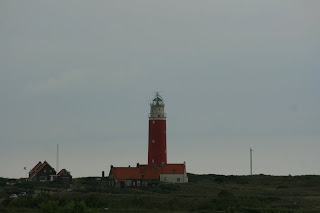


In fact, Texel has 30 km of beach, and from what we saw at the northerly tip of Texel (near De Cocksdorp) the beach is gorgeous - wide and sandy. From the beach though you do see one of the many oil rigs out in the North Sea, but you can also see the next island in the chain off the Dutch coast.


The Wadden Sea is abundant with nature and life - sea birds, seals, fish and little critters on the bottom of the sea, which are evident at low tide and what makes wadlopen so popular. A two year old in a Bugaboo makes wadlopen a little tricky so we visited the wildlife in Ecomare instead...... later in the week there will be a little more on that.

If you want to explore more about Texel (and if you are looking to explore The Netherlands then boat hopping along the islands is a great start) then visit the tourist board site for Texel in English... and for those still practicing their Dutch.....