Showing posts with label Dutch Language. Show all posts

Sunday, June 19, 2011

Crikey, That Snail's Got No Clothes On

A Naked Snail Photo: Antonio Garcia
I was pushing my one year old in his pram whilst my four year was jumping over puddles on the pavement next to us on our way back to infant school after lunch. The heavens had opened that morning and the rain had been continuos since I had done the first school run of the day that morning. In front of us was a mother with a four year old girl dressed from head to toe in pink in one hand and her slightly older brother in the other hand. Suddenly the trip stopped before us and the young girl let out a shriek,

"Ew. Wat is dat mama?" she asked, turning to her mother. She pointed at the ground to a slug.

"Dat is een naaktslak," said her mother laughing. The Dutch word for slug, naaktslak, litterally translates to naked snail. Both children were now laughing. The young boy said,

"Yes, he woke up this morning and forgot to put his clothes on." His little sister giggled. As did I. My four year old looked up at me,

"Nee, toch mama?" he asked, questioning the validity of the boy's statement. The mother continued,

"Yes, he must have been very confused when he woke this morning."

It reminded me just how fabulous the Dutch language can be!

Sunday, May 15, 2011

The Expat Unfriendly Netherlands

Hard to make friends, difficult to learn the local language, fit into the local culture and integrate into the local community. Does this sound like your expat life in the Netherlands?

According to the Expat Explorer Survey carried out for HSBC Bank International the Netherlands placed last out of 25 countries, making it the most expat unfriendly country you could hope for.

Only 36% of expats relocating to the Netherlands find it easy to make friends here and 55% have concerns about the barriers that the local language put up. According to the survey, expats find the Dutch culture hard to fit in to and integrating in to the local community is far from easy here.

The difficulty of making friends in the Netherlands, particularly with the locals, is a common expat forum topic. Learning the language is a common talking point too but for the Netherlands to score so badly on these points did surprise me.

On the other hand, I did feel like shouting  "You see!" to someone who once posted a comment on an article I wrote for the Telegraph. A reader going by the name of "Kingory" commented,

"The Netherlands is about the easiest place in the world to be an expat, the language is really easy if you can hack the pronunciation, English is widely spoken, less than an hour east of London, there are loads of expats there already, and they even have the UK BBC for God's sake!!

Kind of missing the point about trying to integrate I think, but nonetheless you would think that a move to a far flung destination would be tougher than a move to a Western European country.

I would love to hear your thoughts on this. Have you experienced problems getting your social life on track after moving to the Netherlands? Is the culture too much to adapt to? Do the survey results surprise you or confirm your feelings?

Wednesday, May 11, 2011

Learning Dutch - a Tip or Two

Gerrie Soede of Poldertaal
For my last Expats@Home newsletter I interviewed Gerrie Soede, a Dutch language tutor in The Hague, to get her viewpoint on the best way to learn a foreign language and of course she gave me some tips for those learning Dutch in particular.

The good news is that, given the right circumstances (and a bit of talent), you could be fluent in Dutch in three years. The bad news is that for some people fluency is something that will never be achieved. However, don't let that be a deterrent if you don't have a natural flair for languages. Gerrie says,

"Don’t give up trying and remember that communication is always more important than perfection. Learning the local language is important to feel at home and expand opportunities."

I asked her what the most difficult thing about learning Dutch is. Here's her response,

"That depends on your level. At each higher level you’ll meet other difficult things. The articles and verbs at level A1; structure of the sentences at level A2 and B1, combination of words later on."

In terms of good resources to learn Dutch? Gerrie is clear that you each student should have an idea about their own learning preferences and what works for them. She explains,

"You need to choose resources that meet your learning style and your goals. And that’s different for any individual. However, I like Code and De Delftse Methode for the first levels of learning Dutch."

To round up, here are some tips from Gerrie to help those of us in a constant state of Dutch language learning:
  • Invest not only in reading but pay attention to listening 
  • Dare to make mistakes 
  • Invest in learning words and do not think that grammar is the most important
  • Stop the locals talking English to you by telling them you don’t speak English..... no, seriously -  explain you want to practice
  • Stop translating as fast as possible
  • Meet native speakers as soon as possible
Most of all, Gerrie explains that it is vital to consider the fact that you are communicating as more important that getting it right all the time. Accept that you’re probably not perfect and you'll feel much more relaxed about learning Dutch.

Sunday, March 20, 2011

The Ins and Outs of Expat Careers: From Human Resources to Writing

This is the first post in the series about expat careers. To kick off the series I thought I would share my expat career experience with you.......

I moved from the UK to the Netherlands in 2000 and at the time I was a Human Resources (HR) professional. I had studied for a Post Graduate Diploma in HR Management and intended to continue practicing HR when I moved abroad.

Within two months I had a new job with a large international company in a HR role. But to start earning again I’d made many compromises. The position was lower than my UK role was, the salary less. It was a temporary role and working through an employment agency.

Despite the number of international companies based in the Randstad in the Netherlands I found that the job market for my niche was relatively small because my Dutch was nowhere near good enough to work in a Dutch company – and that reduced my options considerably.

Feeling insignificant in a big
office block
Photo: Ryan Smart
After years of working on a specific contract in the same company, having been given a permanent, direct contract with the company the project came to an end and I was moved within the organisation to another team. It went downhill from there.  I felt like a number not a valued team member, a face in the crowd. I started reviewing my career options. I needed creativity in my daily work life. I wanted to write for a living but didn’t really see how.

I considered how I could combine HR and writing and then I discovered Jo Parfitt and attended one of her courses. It was the springboard that took my career on a new direction. During the course, Jo made a general statement to the group which stuck with me,

“You can make a career of writing and you can earn well with it. But you need to be passionate about what you are doing.”

I knew I wasn’t passionate about HR anymore. It hadn’t fulfilled any of the hopes I’d had, especially for much of my time in the Netherlands. But I was passionate about writing.

When I went on maternity leave it was the opportunity to take stock and make the change. I never went back to my HR role nor the international company. I set up The Writing Well instead.

The main barrier was financial but my departure from my former HR position left me financially secure for a number of months so I had a safety net – plus the income provided by my husband’s role gave us enough security to support the inevitable drought times.

Setting up a business in the Netherlands turned out to be straight forward, particularly given the nature of my company. I visited my local Kamer van Koophandel (Chamber of Commerce) to register The Writing Well and then registered the company with the Dutch tax office. That was the administration taken care of.

I undertook a web design course with NTI so I was able to design and build my own website for the launch of The Writing Well. And then I began networking and producing articles for various expat websites and publications – for free.


It built up my name and portfolio and then paid work started to steadily flow in.

A while after I started writing, I started a distance learning course at the London School of Journalism to boost my professional skills and keep my personal development going.

For expats wanting to make a move into the world of writing, my advice is this:  choose a niche, know your market and grow your networks.

Working virtually is vital if writing is your chosen
expat career.  Photo: Maripepa
Grow a platform for yourself (or as Anastasia Ashman and Tara Agacayak call it – a global niche). Writing is a great expat career because it is portable. Your clients can live across the other side of the world and it makes no difference so long as you can work virtually in an effective manner. I would also add that you should make the most of distance learning courses.

You do need the support of those around you. My husband enables me to take the time to disappear into my home office and work because he takes on the household and looking after the children. He has motivated and supported me from day one and even before – and takes an active role in decisions I make, and activities I undertake relating to my business. Jo Parfitt has also been a great support over the years – somebody who remembers her network at every possible chance and points clients in the right direction.

To succeed in a career overseas I think you need to be able to effectively network, both virtually and face to face. You need to be passionate about what you are doing and it certainly helps to be creative – to think outside the box. Finally - believe in yourself.

  • Useful links for an overseas career in writing:

www.joparfitt.com
London School of Journalism

  • Here are just some of the websites that welcome articles which enable you to build a portfolio - 


And for inspiration to build a creative career doing what you love, no matter where you are visit Tara Agacayak's site - Turquoise Poppy.


Next week Louise Wiles shares her expat career story.

Wednesday, February 23, 2011

Two Dutch Signs

On my travels around my local areas I regularly see two signs with sayings on them which are worth sharing because they amuse me. They actually only really work in Dutch so this is really a post for the Dutch speakers out there.

Photo: An "Eikel"  
Wij houden van je hond maar niet van z'n stront - a polite way of saying please don't let your dog foul here.  Believe me its a huge problem here but nice to see someone trying to tackle it in a civilised way.

And my favourite is this as text on a licence plate:

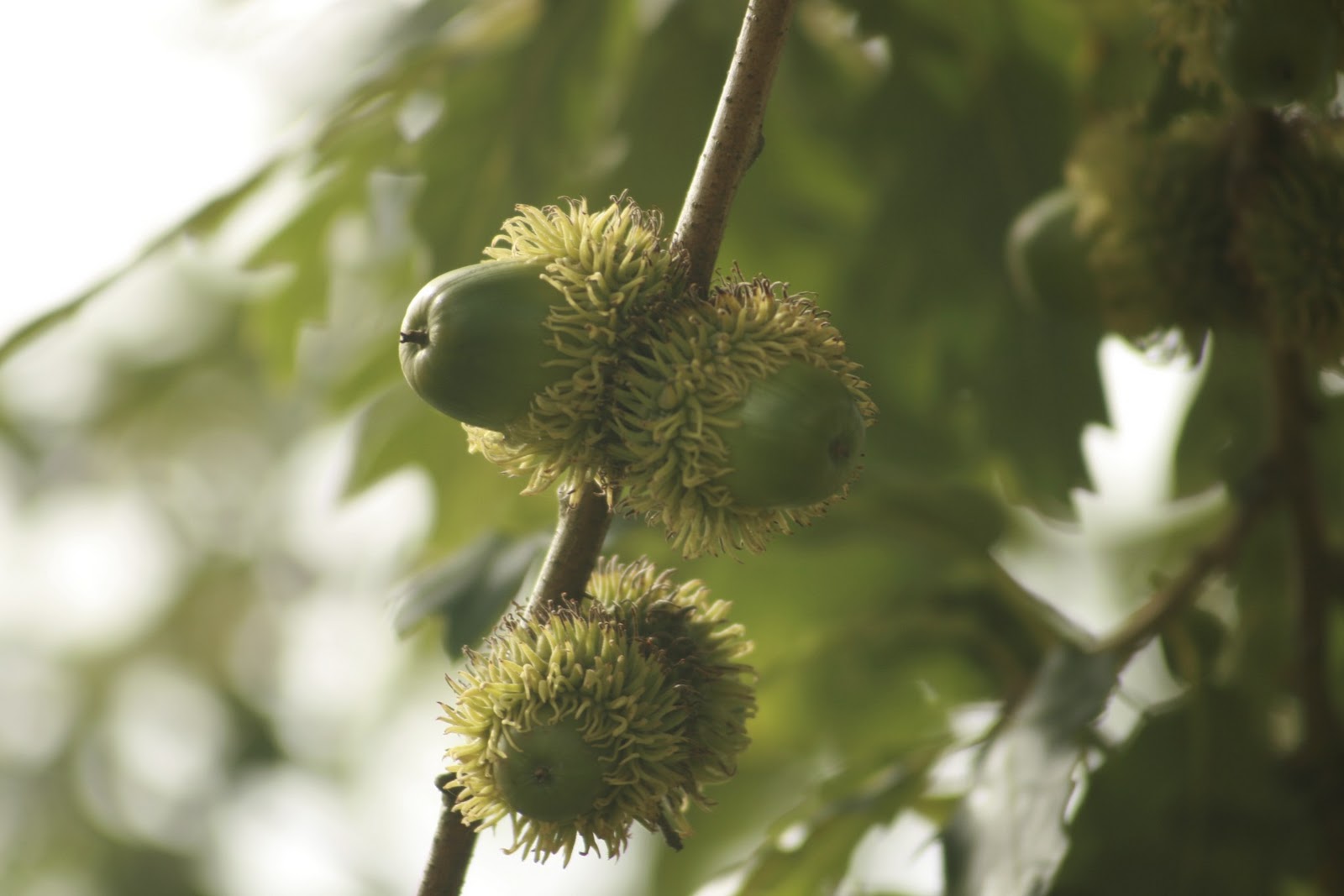
Je hoeft niet in een boom te hangen om een eikel te zijn - for non-Dutch speakers it's a play on words. Eikel means acorn in Dutch, but it also means idiot (put nicely) so it means you don't have to hang in a tree to be an 'eikel'. Trust me, it works in Dutch....

Wednesday, February 16, 2011

Book Review: Nederlands English by Alison O'Dornan

A Book for Teaching Bilingual
Children the Alphabet
When I was teaching my eldest son the alphabet I faced a problem that only parents of bilingual children face - the fact that the traditional objects used for each letter don't match in both English and Dutch. What I mean is this:

A is for apple (EN) and appel (NL)
B is for ball (EN) and bal (NL)
C is for cat (EN) and oh.... kat (NL).....

For each letter I drew the object and until I hit C, it was working a charm. At such a young age trying to explain that cat in English is spelt differently to kat in Dutch is difficult to say the least, if not impossible. In fact, there aren't a huge array of typical Dutch words to use for teaching toddlers the alphabet. Finding something that worked in English and Dutch was hard. And I had only reached C.......

"Learning the alphabet in a second language is much easier when the words start with the same letter in both languages" reads the back of Alison O'Dornan's book "Nederlands English". Which, I think, was my thought process a few years ago when I started with my son. This book would have made that process a lot  easier.

I'll let Alison explain how this book came in to being,

"The initial idea was inspired by a young Dutch mother living in the UK, who found it confusing to read either Dutch or English alphabet books with her one year old daughter. At the age of one, children do not distinguish between the two languages but simply learn that an object has two different sounds associated with it.  Hence as they start to learn to recognise letters by associating their shape with a sound, it is important that the item depicted matches the sound of the letter.  So if a child is shown an English alphabet book where “K” is often represented by a picture of a ‘Kite’, then this would be very confusing as it should be “V” for ‘Vlieger’ in Dutch, a very different sound. By carefully picking the objects that we have used for our ABC book we have eliminated this confusion."

The book itself is nicely laid out with the English word and a sentence at the top of the page, a picture of the object in the middle and the Dutch word and text at the bottom of the page. It's the first book in what will be a series with other languages.

It's a great concept and as far as I know it is quite unique. If you're teaching your children a second language from an early age this is a great resource to have. The book is currently being revised and teh new version will be available in the spring - it's worth waiting for the updated edition for an improved read with your children.

For more information and a peek inside the Dutch/English book visit www.Diglotbooks.com

Sunday, November 21, 2010

"Komt Een Vrouw bij de Dokter" - The Book

As I crept in to bed sniffing and snottering my husband asked,

"Finished your book then?"

Yes I had. I had just turned the final page over of 'Komt een Vrouw bij de Dokter' written by Kluun (aka Raymond van de Klundert). This is Kluun's debut novel written in 2003 and is dramatised from events in his own life.

It's a funny thing to enjoy a book which evokes gut wrenching tears but enjoy it I did. Well, when I say enjoy... I mean I found it hard to put down, I emphasised with the characters and I experienced their pain. That's what a good book should do right - put you into someone else's world?

When I woke the next morning I had puffed up red eyes and I was glad the book was finished. Myrna Goossen (Aperitivo) sums it up perfectly, "Man, man, wat een heftig book."

Komt een vrouw bij de doktor is a book about Stijn and Carmen living in Amsterdam in the prime of their life, both running their own companies, enjoying the night life of the Dutch capital city, surrounded by success and friends. Until they are struck by breast cancer.

This book is their journey through cancer, about how it rips at the heart of their family and confronts her close friends. It is written from the perspective of Stijn, a fun loving, philandering, emotionally challenged husband as he faces up to the reality that his wife is terminally ill. It is a book about preparing for the end, an ode to love and the strength of family. The book is a roller coaster of emotion from anger at the medical establishment, to hope brought by treatment options, desperation as the effects of chemo take hold, to the final realisation that Carmen won't see their young daughter, Luna grow up. It is a heart wrenching read, and all the more because it is based on real events.

Be prepared for humour and tears.

For those whose Dutch is in progress..... the book is available in English with the title "Love Life" by Ray Kluun. It has also been made into a very successful film of the same title starring Carice van Houten, Barry Atsma and Pierre Bokma. You can see the trailer on zie.nl.

A book sequel entitled "Widower" is also available (though I am yet to read it but it is on my reading list for sure).

Sunday, November 7, 2010

Mama and Papa or Mummy and Daddy?

Photo: Dirk Herrmann
An interesting post caught my eye on the networking site Insego this week. A member asked if other parents preferred to be called mama or papa, like the Dutch use, or whether other expats preferred to use the terms of their native language - so in my case mummy and daddy. It struck a chord because it is something I have thought about since becoming a parent.

I speak English to my sons. The idea is that they speak (and in the case of my youngest, will speak) English back to me. However, my eldest calls me mama, which is what he learnt to call me from me and his 'papa'. I never really thought anything of the term mama, nor particularly consciously decided on mama instead of mummy, until one day my son called me mummy. And it felt weird. it somehow did not fit.

He had called me mama since the day he could talk and after an extended trip to the UK, he came out suddenly with mummy. I didn't react instantly because it took a second to realise he was actually addressing me. I corrected him with "mama" and he looked confused. Everyone else in England had used mummy when referring to me - "Shall we see if your mummy wants to do that?" "Maybe ask your mummy before you eat that." So he had adopted it and begun using it back in Holland. To my dismay. And I still am not sure, even now, why it dismayed me. But it did. And he now, generally, calls me mama. Every now and then he reverts to mummy but it is so infrequent it doesn't bother me.

I think I got used to hearing mama from him so when he used mummy it sounded alien. However, there is also another part that prefers mama because it reminds me of who we are as a family. My children are Dutch and no matter what my nationality is, they are currently more Dutch than English. And so, somehow, it seems more natural for them to call me mama.

What do your children call you? Do you use terms from your host or birth country?

Tuesday, November 2, 2010

Top Chef - A Melting Pot in the Kitchen

Kranenborg and Jaspers present RTL's nationwide search
for Top Chef 2010
Another set of contestants started this week on RTL's Top Chef, the Dutch version of the culinary contest to find an amateur marvel in the kitchen. If you haven't seen it tune in to RTL5 at 7pm every work day (or record it as we do because it's still bedlam in our house at 7pm.......) and catch up with Michelin star chef Robert Kranenborg and culinary expert Julius Jaspers - they are a funny duo to watch! And even more reason to watch - at the end of each week the pair take the contestants to a Michelin star restaurant in the Netherlands to cook under the beady eyes of top professionals like Nico Boreas and Mario Ridder.

But back to the point of this post...... Every week my husband and I play two guessing games whilst we are watching the first show of the week.  The first is "Who will make it through to the next round?" which is a logical game for an elimination style competition. The second game is a less predictable game that you can play with a Dutch cooking program, namely "Guess the nationality of the contestant".

Now, obviously, the majority of the participants are Dutch. Very clearly Dutch. However, usually at least one contestant a week allows us to play guess the nationality.

This week Elvira, from Suriname, was an easy start (particularly as it was mentioned....) but Megy was a whole different ball game. Our first guess was "East Europe". Then it changed to "maybe a Southern Europe country..." Then we couldn't really decide. Turns out she is from Poland but she has lived in the Netherlands for eight years.

In previous weeks we have seen a Frenchman, an Italian, an Iranian and a Turk and another contestant who speaks at least six languages and has lived in various countries. Expats all. But all speaking Dutch, taking part in a television program and striving to become Top Chef Nederland 2010. The show's participants are as diverse as their cooking abilities and the origins of the food they are cooking up.

This show showcases one of the things I love about living in the Netherlands; the diverse, multicultural blend of people all doing it the Dutch way.

Monday, September 13, 2010

A Dutch Decade: Q&A with Jo Parfitt

As part of the Dutch Decade week I threw the floor open to you to ask any question you liked about expat life or life in the Netherlands.....

Jo Parfitt, expat author, entrepreneur, speaker, teacher, mentor, coach and general writing guru, asked,

Jo Parfitt
"They say that after about 2 years abroad there is no going back, that you are now permanently changed and that from now on, wherever you live the grass will be greener. Do you now feel that, happily and completely this is your home, or do you have "grass is greener" moments? Please tell me about the state of your integration".

My Answer: I am not sure about the validity of after 2 years there is no going back; after ten years I think that is most definitely the case. For the first few years I lived in the Netherlands, whenever I travelled back to England I had the feeling that I was going home. In later years that reversed and as soon as we board the ferry or train back to Holland it feels like I am heading home.

I still miss my friends and family back in England and that will never change, but when we go back there I feel like a visitor and not a native. And that is not strange after a decade away.

That is not to say I don’t have my ‘grass is greener’ moments – some things in the Netherlands irk me and there are occasions you will hear me say, “You wouldn’t have this problem in England.” But of course, no matter where you live there are things you don’t like and at the end of the day England and the Netherlands are not poles apart like some cultures are.

I feel well assimilated into Dutch society - I am married to a Dutchman so I have had to  but I remain English and will never be a true local. So in a way, living overseas for ten years means that you live in the no man’s land between being an expat and being a local.

Photo: Myles Davidson
I speak Dutch to a reasonable standard (at least nobody tries to speak English to me anymore when I am out and about), I understand a good deal about Dutch culture and what makes the Dutch tick. I have a birthday calendar in my downstairs toilet, my potato masher is well used in the winter and I get enthusiastic about the national football team; I do my best to integrate. However, there are some things, no matter how long I live here for, that I will not adopt or accept as the norm: birthday circles and bad customer service.

Does your host country feel like your home now or do you still have a feeling of coming home when you travel back to your country of origin?

Sunday, September 12, 2010

A Dutch Decade: Q&A with Arwa Lokhandwala

As part of the Dutch Decade week I threw the floor open to you to ask me any question you liked about expat life or life in the Netherlands.....


Arwa* asked, "When did you feel learning the language (Dutch) was important, so as to enable you to integrate better into Dutch society? Was it during the initial months? Or do you feel you managed well initially without knowing the language since English is so widely spoken here? Did the realisation come about only after a couple of years when say you started a family or a business here in the Netherlands? Also what difficulties did you face while learning the language and how did you overcome them?"


My answer: I started to learn Dutch before I even set foot on Dutch soil with the intention of living here. At school I learnt French and German, and for my university degree I continued with my French and lived in Toulouse for a year so you don’t have to tell me twice how important it is to learn a local language. Once I knew I was moving to the Netherlands, I started trying to get the basics of Dutch. I used 'Hugo Dutch in Three Months' as a foundation, read news articles online and then tried to translate them with my Dutch partner sending back corrections by email. I practiced basic phrases on the telephone every time we talked (which was daily – British Telecom called me to notify me of ‘unusual high activity’ on my phone line and demanded an upfront payment to settle the ‘unusually high bill’).

When I arrived here, hit by culture shock and missing my family and friends, I found it hard to get out there and try and talk Dutch in shops and with my partner’s friends and family. Initially they all spoke English with me – it would have been a quiet household otherwise. After a few months, everyone switched to Dutch as they worked out that I understood a lot but suffered from stage fright when it came to talking. That shook me out of it! If I spoke English they looked at me blankly, forcing me to say it again in Dutch and with time, hard work, and patience on their part, it worked.

It was actually years later that I went for the first time to any kind of formal Dutch language tutor (I saw Gerrie Soede of Poldertaal in The Hague and highly recommend her by the way) as I realised that understanding and speaking was going well but writing the language was much harder. Gerrie helped me with grammar (I got to hear “that’s an exception to the rule’ a lot….) and gave me lots of writing exercises and useful resources.

Funnily enough, having a family actually decreased my use of Dutch at home as we are bringing both boys up bilingually. That means I speak English to them and their father speaks Dutch – otherwise they’ll end up speaking Dutch with an English accent and vice versa! By the time I set up The Writing Well, my Dutch was good enough to cope with the Chamber of Commerce and the tax office and any other administration body that demands money from me……

I had a colleague not long after I arrived in the Netherlands who had been here a few years but who could not speak much Dutch. I will never forget her telling me that her daughter brought home Dutch friends from school and she had to ask her daughter to translate for her – that was an extra motivator to get to grips with the language.

On a final note, I don’t believe you can truly understand or enjoy another country’s culture without learning the local language – without it you cannot understand the newspapers, films, TV programs, music text, radio programs. You can’t fully follow politics or happenings in society.

How have you learnt the local language?

*An Indian expat in The Netherlands, Arwa is a travel and expat writer. Her articles have been published in a host of travel and expat websites including the Lonely Planet. She has traveled extensively in India and Europe, and this has given her an excellent opportunity to understand different cultures. She also maintains her blog Orangesplaash wherein she shares her expat experiences, travel adventures and expat tips!  You can catch her on twitter at @arwalokhandwala.

Saturday, September 11, 2010

A Dutch Decade: Q&A with Invader Stu

As part of the Dutch Decade week I threw the floor open to you to ask me any question you liked about expat life or life in the Netherlands.....

Stuart* asked: What is the funniest language or cultural mix up you have experienced during your ten years in the Netherlands?

My Answer: Without hesitation, the funniest language mix up was when a pediatric nurse cast serious aspersions on Bert’s sexuality. My son, two at the time, had to go for an examination at Lange Land hospital. Whilst we waited for the nurse, he was busy with some toys that were scattered around the room. He picked up an Ernie, of Sesame Street fame, and began to play. 

The nurse appeared and to get him a little warmed up (some two year olds are not too happy when a stranger wants to poke and prod them) she asked about the cuddly toy he was holding,

“Nou, wie is dat?”

“Ernie,” replied my son looking at her as if she had landed from an alien planet.

“En waar is Bert?,” she continued.

“Bert’s at home,” he replied, turning back to continue playing with Ernie. The nurse looked a little shocked and turning to us asked,
“Wat zegt hij nou?”

“Bert is thuis,” my husband said “maar dan in het Engels. Hij heeft een Bert knuffel thuis.”

The nurse broke in to hysterics and we all looked at her. As if she had landed from an alien planet. 
“Ik dacht dat hij zei ‘Bert is een homo’.”

In the sterile surroundings of a hospital examination room, it was the laugh we needed.

What language or culture blunder has made you laugh?

*Stuart is the brains behind the near celebrity status expat blog, Invading Holland. Recently engaged to be married, a fellow Brit and nearing his ten year anniversary as an expat in the Netherlands, Stuart has been interviewed by The Telegraph and you may recognise his cartoons on The Stuart Britton Show website. Head over to http://www.invader-stu.com/holland/ for a seriously good laugh.

Tuesday, September 7, 2010

A Dutch Decade... Ten Highlights of Ten Years

This week I celebrate the milestone of ten years living in the Netherlands. There have been highs and lows. There have been tears and laughter. Here are my top ten highlights from a decade in the land of the Dutch - in no particular order.

Birth of my First Son: having a baby in Holland is not like having a baby in other Western countries. Almost 30% of births here are home births compared to 1% to 2% in the US and UK. More than a third of Netherlands based women plan home births but end up in the hospital for medical reasons. I am one of those women. Despite this, planning for a home birth was a memorable experience and one that I would not have had if my son had been born in England. His arrival into the world is most definitely a highlight to cherish, regardless of where it happened.

Birth of my Second Son: There was no home birth planned the second time round - there was no choice. The experience though was a great one - with a doula on hand, an amazing maternity nurse and a birth plan followed to the letter. Within a few hours of the birth we were all at home as a new family of four.

Kraamzorg: What made both births particularly special in the Netherlands was the postnatal care from the kraamverzorgster. I am in no doubt that this is the best thing to come out of the Dutch healthcare system, or any other Dutch system for that matter. For someone who doesn't have their direct family and best friends round the corner, such support for the first week after a birth is invaluable.

Photo: Anouschka Rokebrand
My Dutch Wedding: we married in the Netherlands in a beautiful setting in Hauwert where the houses have thatched roofs and you can still picture horse and carts on the quiet roads of the village. My brother flew over from the US, my family and friends came over from England and the Dutch contingency made the trip upwards for a day that could not have gone better. It even stayed dry, which for July in the Netherlands is proving to be a miracle........

Starting my Own Business: There is nothing like a complete change of career to test your character, nerves and wallet. But in 2008, that is exactly what I did when I set up The Writing Well and left the world of human resources behind. It was the best career move I ever made and I have never looked back. Without my expat life this is a move I would never have made so I have my Dutch surroundings to thank for a happy, creative work life.

My Husband's Career: It's not only my career that changed because I moved to the Netherlands. My husband also made a challenging and daring career move to an international organisation where the principle language spoken is English. His English has obviously developed astoundingly over ten years, so much so it became his working language. Thankfully, his Dutch is still quite good too.......

Mastering Dutch: Of course, whilst my husband was improving his English, I have spent ten years coming to grips with the Dutch language. It has been a real highlight to move through the journey of the eight steps to learning a language:

  1. avoiding eye contact and refusing to speak
  2. admitting you have to talk to somebody at some point and speaking English everywhere 
  3. getting through the mumbling 'dank u wel' and nodding enthusiastically stage,
  4. saying 'wat zegt u?" a hundred times a day with a blank look on your face
  5. reeling off automated responses to set questions you know you will be asked (such as "Wilt u koopzegels?" or "Wilt u een tasje?") 
  6. reaching the stage of being able to hold a basic conversation
  7. realising you can read Dutch newspapers, watch Dutch films and talk to the neighbours quite confidently as well as accepting Dutch grammar for what it is and no longer asking why there are so many exceptions.
  8. feel practically like a native if it weren't for that accent you have whilst speaking Dutch......

My 30th Birthday: Without a doubt one of my best birthdays ever - the highlight was a flight over some of the Netherlands in a Cessna C172. The event was a total surprise arranged by my husband, who wanted to show me a little of his homeland from another viewpoint. I should also mention that I find having only the floor of a little aircraft between me and a drop of up to 800 feet a little daunting. However, fears of death aside, it was an amazing experience. 

My Flight Certificate - a record of 
my survival
We took off in Lelystad with an experienced pilot and flew over the Ijselmeer to Texel where we stopped for hot chocolate (though a stiff drink may have been more appropriate). We then took in the view of Friesland, took a tour over Zwolle and headed back to the airfield in Lelystad. I even had a go at flying the plane myself, but freaked out after seven seconds so passed the control back to someone who knew what they were doing. My husband however, revelled in flying the plane for most of the flight back to the airfield - he had ambitions to be a pilot in his youth but the fact that he can't see past his nose without contact lenses put an end to that dream.  To say it was cloudy and bumpy that day is an understatement - however the view I saw from the back of the plane over a paper bag was beautiful.

Expat People: During ten years living in another country I have met people, both in real life and virtually, who have had an enormous impact on my life - people who have guided my career, inspired me to reach higher, become trusted and treasured friends and supported me through the lows. An expat life forces you to look for a network in places you wouldn't look back in your home country. The result is a colourful and rich group of contacts.

Nurturing Bilingualism: Realising that your offspring can speak two languages by the age of three is a rewarding experience. Hearing a little voice switch languages depending on the audience is truly amazing and one gift of expat life that is priceless.

Sunday, July 11, 2010

Dutch Music (6): A Round Up

To end this short series about Dutch music here are a few other famous Dutch artists you may, or may not, have heard of.

Blof: four Dutch guys from Vlissingen who formed a band back in 1992 and who are still going strong. They became very popular at the end of the '90s and peaked at the beginning of the '00s. In 2001, their drummer Chris Gotte died in a motorcycle accident and the band took some time out to mourn the loss. In 2004, they took on a more international dimension with a performance with The Counting Crows with the single "Holiday in Spain".

Marco Borsato: a singer and an actor whose company was recently declared bankrupt. He started out singing in Italian, before he turned to Dutch.

There are also a few famous Dutch artists who perform in English:

Anouk: a female singer born in The Hague, Anouk moved for a stint to the US to try and make a name for herself there but her success was limited. She is however a very popular artiest in the Netherlands.

Krezip: a band from Tilburg, this group split in 2009 following huge success and 12 years together.

Tiesto: a DJ and record producer from Breda, he has been named the world's number 1 DJ on more than one occasion. He also performed live at the opening ceremony of the Olympics in Athens and enjoys international success.

Do any of these artists resonate with you? What Dutch music do you listen to?

Wednesday, July 7, 2010

Dutch Music (5): Acda en de Munnik

Thomas Acda and Paul de Munnik met at the "Toneel en Kleinkunstacademie" in Amsterdam and soon became a popular cabaret act. Aside from cabaret and music, Thomas Acda also dabbles in theatre shows (e.g the rock opera with Paul de Munnik, Ren Lenny Ren), TV (including an appearance in 1997 in Baantjer) and films (e.g. Alles is Liefde).

I have seen Acda en de Munnik live a few times now and they are funny, entertaining and above all make (in my humble opinion of course) great music. In fact, these are without a doubt my favourite Dutch artists.

Sunday, July 4, 2010

Dutch Music (4): André Rieu

Blog post number four about Dutch music and this time André Rieu stands centre stage with a change of music type. This rather flamboyant Dutch violinist, conductor and composer attracts a worldwide audience and is from Limburg. He has probably not escaped your attention as he does seem to be on Dutch television an awful lot.

He has a controversial reputation in the classical musical world, known for reviving waltz music (starting in the Netherlands and spreading out across the globe) but also for making classical music for the masses, something not wholly appreciated in "cultured" circles.

André has played the violin since he was five years old and as he is now sixty, that is some years playing.

Useless fact about Mr. Rieu - in 2009, he appeared as himself in Neighbours, the Australian soap that thankfully escaped TV in the Netherlands, in a cameo role.

Wednesday, June 30, 2010

Dutch Music (3): Andre Hazes

Number three in the Dutch music series and this week Andre Hazes is in the limelight. Yes, I know what you are thinking... he's dead isn't he? Well, yes he is. He died from a heart attack in September 2004, much to the dismay of many in the Dutch population. To be honest though, not the biggest surprise to hit the music world - he wasn't generally the healthiest bloke you could meet - an alcoholic by all accounts and a smoker.

Andre Hazes sang what is essentially a kind of folk's music, and to be fair he was incredibly popular in this genre but ironically never had a number one hit in the Dutch Top 40 until after his death when he topped the chart with a rerelease of "Zij gelooft in mij".


Next time, a change of genre with a look at Andre Rieu......

Sunday, June 27, 2010

Dutch Music (2): Jan Smit

Now, as promised, I am following up on my last blog post on the topic of Dutch music. This time, Jan Smit is on the hotseat. And again, if I was going to recommend a Dutch artist to listen to.... this would not be it.

Firstly, Jan Smit is known (at least in my world) as the man who did those cheesy C&A adverts and posters. They weren't good.


Essentially he is a schlager singer and had his first hit when he was 12 years old back in 1997. His star faded a bit (though continued to be popular in Germany) until a few years ago when he hit the big time again (hence the C&A campaign?) with songs such as "Als de morgen is gekomen".


Probably the biggest news about him lately was the media hype around his split with Yolanthe Cabau van Kasbergen, a Dutch actress/presenter: a fairy tale romance gone bad.

Next post.... Andre Hazes.....

Wednesday, June 23, 2010

Dutch Music (1): Frans Bauer

I was captivated by the goings on on an expat forum on the topic of Dutch music. Somebody has asked for recommendations of Dutch music to listen to. The requestor wanted the song text to be in Dutch and had been told by colleagues to listen to Frans Bauer and Jan Smit. Really. Having listened to both artists, needless to say, they were looking for other artists to try.

Now, I have nothing against Frans Bauer. Each to his own. And if you like that sort of thing...... it is of course a free country. However, the man does not even need to open his mouth to rile me. He has the type of face that raises the temperature of my blood and I am not sure why - perhaps the fact that he evidently wears more make up than me... or perhaps the irritating smile. Or is it just me? Look for yourself.


Having said that, I defy anyone not to know at least some of the words to "Heb je even voor mij?" And you will not see a better video clip - kicking off with Frans himself cycling into a camp site......

As a special treat, here is the man himself.. all together now....


Next post... Jan Smit.......

Sunday, June 13, 2010

The Dutch National Anthem

As the World cup gets underway, we hear national anthems as if they are going out of fashion. It made me curious about the origins of the Dutch national ditty.

It is called "Het Wilhelmus" and being over 400 years old is the oldest national anthem in the world, though it has only been the official Dutch anthem since 10 May 1932. It is thought to have been written back around 1572 but the writer of the piece remains uncertain. There are two theories, one being Philios van Marnix and the other Dirck Coornhert, but many doubt that either of the men wrote it due to the nature of the language... The origins of the tune is less uncertain and is based on a french song, "Autre chanson de la ville de Chartres assiégée par le prince de Condé".

The song tells the story of Willem van Oranje and his fight against the King of Spain and is written as if Willem himself is singing it.

Het Wilhelmus is made up of fifteen verses and is an acrostic, with the first letter of each verse originally spelling Willem van Nassov (old Dutch for Willem van Nassau).

For those of you who feel the need to stand up and sing the first verse of the Dutch national anthem, here it is:

Wilhelmus van Nassou ben ik, van Duitsen bloed,
den vaderland getrouwe blijf ik tot in den dood.
Een prinsje van Oranje ben ik, vrij onverveerd,
den koning van Hispanie heb ik altijd geëerd.

And here's how to sing it properly.