Showing posts with label Tourism. Show all posts

Tuesday, June 14, 2011

Country Hopping from the Netherlands

One of the many things I love about living in the Netherlands is the fact that we can jump in the car and drive to any number of countries - we can be "abroad" without the use of an aeroplane or ferry in no time at all. Given that I am a Brit this is a big thing!

Our latest venture to foreign lands was a two week vacation in Lower Normandy in France. We jumped in the car and off we drove.... well, when I say jumped in the car..

What I actually mean is we spent days accumulating the essentials for a family of four to take with us, had a last minute panicked scramble around at 6 a.m. on the morning of our departure to gather the real essentials such as favourite toys, musical Pooh Bear sleeping aid for my 4 year old, sandwiches, drinks and DVDs......., spent 90 minutes packing the car up, bundled two sleepy, grumpy children in to the car and then hit the road. After ten minutes we stopped to sort the car DVD player out..... an hour later we stopped for a toilet break after hearing "ik moet plassen" fifty times....... you get the picture.


Eight hours after we left our home in Zuid-Holland we arrived tired but relieved at our gite in Longues Sur Mer on the Normandy coast.

The Beach at Longues Sur Mer (c) The Writing Well 2011

Normandy Shop Front (c) The Writing Well 2011

Shell Covered Beach at Port-en-Bessin (c) The Writing Well 2011

View from the Gites in Longues sur Mer (c) Lars van Mulligen

Two weeks later, after a fantastic break, we did the same journey in reverse...... and it was worth every minute in the car.


Sunday, February 13, 2011

The Louwman Museum - The Dutch National Car Museum

The Louwman Museum in The Hague (c) L van Mulligen
Situated in The Hague in a purpose built building, the Louwman museum showcases what was the oldest private collection of cars in the world. The museum opened last year and we kept driving past it from the time it turned in to a building site through to the erection of an impressive looking building. However, until January we hadn't ventured in. My son's 4th birthday presented the perfect opportunity to change that.

The collection was started in 1932 with the acquisition of a twenty year old Dodge. It's now very much older and just one of the 200 plus pieces to marvel at inside the museum. What is quite amazing about the exhibition here is the sheer variety of vehicles that has been collected over the years, from horse drawn fire engines to a Cadillac owned by Elvis Presley and from a tandem from 1897 to a Toyota Prius Hybrid made in 1998. It's a stunning collection of vehicles - and that out of the mouth of a non-car fanatic.

It's not just the cars that are a sight to behold, the building is also impressive. Michael Graves, an American architect, designed the building to mix with the beautiful surroundings and there is a sense of Dutch traditionalism and modernism at the same time.

The high ceilings and ample space for the exhibitions give a luxurious feeling as you wander around and lighting is used optimally to reflect the era of the cars of show. The lay out of the exhibitions, and the design of the corridors, ensure that each new section of the museum stays a surprise until the last possible moment.

To top it off, the last section of the museum, which incorporates a restaurant and bar, will surely raise a smile.

To find out more visit the Louwman museum website which as far as I can work out is only in Dutch - but never fear because all information about the cars in the museum itself is in Dutch and English.

Wednesday, December 8, 2010

Expat Royal Wedding Fever

According to an article in The Telegraph this week, there has been a significant surge in flight searches within the Netherlands for the dates around THE royal wedding planned for 2011.

For those of you living under stones or who have been incommunicado in recent weeks, the British crown prince, Prince William, is due to marry Kate Middleton on April 29 2011. It is the first royal wedding of interest since Prince William's father married Lady Diana Spencer in 1981 (and no I won't say "and look at how that turned out").

Is this surge in flight searches British expats scrambling to get back to the UK for the big event? Or does it reflect wedding-happy Dutch travellers keen to compare this British royal wedding to the Dutch royal wedding of Maxima and Willem-Alexander?

The fact that so many Brits are looking to escape the UK around the time of the wedding and take advantage of the additional time off work might give us a clue......

Who's heading back for the royal wedding? Anyone? Or are you staying put to celebrate Queen's Day like only the Dutch can? Any Dutch expats in Britain planning to head to London for Kate and William's special day?

Wednesday, August 25, 2010

Guest Post: It's All Greek to Me by Anneke Kamerling

This is the first in a series of extracts by Anneke Kamerling from her booklet called 'Typical Greek' about her experiences as an expat in Greece. You can find out more at het-boekje.nl.


Photo: Chrissi Nerantzi
I know the Greek alphabet. The word itself is Greek. I learned it from my father, before I was taught ancient Greek at school. The advantage is that I can read what is written. The disadvantage is that I do not understand what it means. I must learn Modern Greek, now that I'm established here in Greece. But learning Greek is different from learning English or German and even French is a cinch compared to this complex language.

The ancient Greek language is more than 3000 years old. It is a dead language that no longer develops. Over the centuries, Greece was often conquered and occupied. Especially during the Turkish occupation, which lasted over 400 years, the development of the Greek language virtually stopped. The population continued to speak the language though and also in the Greek music the language was kept alive, but reading and writing at that time was dominated by only a select group of scholars and clerics within the oppressed Greek Orthodox Church. In the 19th century the 'Katherevousa' was introduced. This artificial language, composed by scholars who held to the ancient Greek from ancient times, was taught in schools as the official written language.

The spoken language, which had been through a natural development, differed enormously. After the fall of the colonels the Katherevousa was abolished in 1974. The spoken language, 'Dimothiki', became also the written language. This is the language, which to this day is used in Greece. The language has kept the alphabet of the ancient Greek language, but is constantly evolving with new words like airplane, computer, etc.

I start studying Modern Greek. Some words are recognizable from the Ancient Greek, but these are mostly words that we have integrated into our language, such as psychology, pharmacy, mechanics, etc., so that doesn't help much.

It starts with the simple yes and no. Where is it heading when 'yes' is 'no' (ναι)? Most difficult for me, however, are the language's five is, the two os, the two es and the accented syllables. The accent is not only specific in the Greek language, but also important. The same word spoken with a differently positioned accent can mean something completely different. Often I pronounce words wrong. For example: I ask at a romantic dinner for a sweet prison*... I regularly go one day to the much*... I look through the mosque τζαμί (tzamí) of the window τζάμι (tzámi) and I give my kiss φιλί (filí) a girlfriend φίλη (fíli)... who by the way is also of a different race φυλή (filí). Over time I've learned the difference between children παιδάκια (pedákia) and lamb chops παïδάκια (païdákia), I read a passage χωρίο (chorío) from a book about a village χωριό (chorió) and I am πότε πότε quite upset of the word πότε, or is it ποτέ?* In the beginning I actually said soft μαλακά (malaká) when trying to call someone a wanker μαλάκα (maláka).

It gets more confusing! Not only does the accent play a role, but also the pause between two words is crucial, something the Greeks do not usually take so closely. For example if you order two large cups of tea, δύο τσάι, μεγάλα (dio tsai megála) don't forget to pause at the comma. Otherwise you will be surprised when you get two cups of tea with milk, namely δύο τσάι με γάλα (dio tsai me gála). Anyway, for English people it makes no difference.

But those vowels... That is exactly ακριβώς (akrivós) where I pay a high ακριβός (akrivós) price. The squadron ίλη (íli) bites in the dust ύλη (íli). It costs me liters λίτρα (lítra) of ransom money λύτρα (lítra).
Or even worse, the combination of vowels and stress, for example: I speak μιλώ (Miló) of an apple μήλο (mílo) or, a healthy complexion χροιά (chriá) is no necessity χρεία (chría). Besides όμως (ómos), I am beaten on my shoulder ώμος (ómos) for all that όμως (ómos) in a cruel ωμός (omós) way every time the Greeks were laughing at my blunders!

Φυλακή (filakí) = prison. Φιλάκι (filáki) = kiss
Πολύ (polí) = much. Πόλη (póli) = city
Πότε πότε (póte póte) = occasionally
Πότε (póte) = when and ποτέ (poté) = never

Sunday, April 18, 2010

Guest Post Series: My Holland by Marianne Orchard

The highlight of my life in Holland was a Sunday morning. We woke up in the house we had just bought, the first house we had ever bought, to the sound of bells from the town hall. We were right in the centre of town.

The house was still empty – we hadn’t moved in properly yet – so we got up and walked the few minutes it took to reach a café and sat outside at one of the tables on the boats moored in the water. Ever since I first visited Leiden I had wanted to live there and now I was, right in the centre.

The lowlight is the reverse of this. It was pulling the door shut to our house in Leiden for the last time. It was hearing those bells from the town hall for the last time. It was walking across the square and looking back at our street leading off the corner of the square and realising that it no longer was our street. We would no longer sit outside our house with a glass of wine in the evening and give directions to passing tourists. We were moving to a house with a garden.

Having moved away from Leiden I have found another Holland. I wake up to hear birds singing rather than bikes rattling and seagulls and students squawking. I live in a house with a driveway, two driveways in fact. There are woods nearby. We have countryside. There are children at school whose parents are farmers.

The Holland I live in now – a village up north – is a different Holland from the Holland where I used to live. People here mistrust ‘het westen’. ‘Wasn’t there lots of crime?’ they ask if I say I lived there. They leave their homes and get into their cars. They drive to school. They drive to the shops. They drive. They drive. They drive.

The car-on-your-driveway Holland, the having-a-driveway Holland, the safe no-one-on-the-streets-in-the-evening-except-dog-walkers Holland, the return-to-a-quiet-village-at-the-end-of-your-busy-working-day-Holland is not my Holland.

My Holland is a historical town with houses from the Golden Age lining canals. My Holland is a bike chained up outside your house. My Holland is walking and cycling everywhere. It is people out on the street at night, people without dogs. It is sitting in the street rather than in your own garden.

That’s the thing about living in a foreign country. You think that the whole country is like where you’re living but it isn’t. Holland is not just cycles in front of your house. You can find cars and driveways and out of town superstores too. You can find quiet villages to drive home to at the end of a busy day. It’s just knowing how and where to find them.

What I’ve learnt since leaving Leiden and moving to the country is that your internal world is the one that is important. It’s about doing your thing regardless of your outside environment. It’s about having New York New York moments where you know that ‘if I can make it there I’ll make it anywhere’. That’s what living in another country is about.


Marianne Orchard writes about living in Holland, the Dutch language and learning Dutch at likeasponge.nl. She has lived in the Netherlands for long enough that she should say the Netherlands instead of Holland.

Tuesday, March 23, 2010

Keukenhof - The Garden of Holland

Imagine a garden as far as the eye can see, a garden adorned with every colour you can imagine, with every type of flower you could hope to set eyes on. Picture a garden so perfectly landscaped you have to pinch yourself to make sure you are not imagining it.
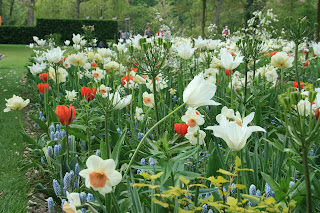
Welcome to the Keukenhof in Lisse, the most popular tourist attraction in the Netherlands and home to the most famous garden in the world (probably...). It opened its gates to the public last week and remains open until16 May.

It's not just about flowers though; there are water features, art displays, themed gardens, parades, sculptures, exhibitions and special events. In short, more than enough to do and see and hard to fit in to a one day visit.

Each year there is a unique theme that encompasses Keukenhof, and this year it is centred around "From Russia With Love", honouring the wonders that Russia has to offer: Russian dolls, ballet, landscapes, gardens, animals and even an old Russian army bike.

If you are yet to visit these gardens, then make this the year you do. You can order tickets online to help bypass some of the queues (it is a very popular tourist destination so also great for people watching...). I can guarantee you won't regret a trip to Keukenhof!

Thursday, October 15, 2009

Positive Thoughts About the Netherlands: Small but Diverse

The Netherlands may be small, but it is perfectly formed (albeit a little on the wet side, seeing that it is predominantly set on reclaimed land). The little country is remarkably diverse for its size. For a start, despite a small population relatively speaking there are two official languages: Dutch and Frisian.
There are also packed, crowded cities and peaceful, sparsely populated villages, miles of coast line, nature areas, islands and just about every possible attraction you can think of; all packed into a land area of 33,883 sq km.

If you want amusement parks the Netherlands has an abundance; Efteling, Duinrell and Walibi World to name a few. If you want to visit a zoo or animal park, the choice is endless; Artis, Blijdorp, Ouwehands Dierenpark, Dolfinarium, Vogelpark Avifauna or Apenheul. And if we start looking at Museums, the list is literally endless! Some of the top ones to check out in the Randstad are the Van Gogh museum and the Rijksmuseum in Amsterdam, as well as the Ann Frank house of course, and the Gemeentemuseum, Panorama Mesdag or Museon in The Hague. Further afield the Zuiderzeemuseum and Zaanse Schans are most definitely worth a visit.

There is so much contrast, diversity, tradition, history, fun, adventure and architecture in the Netherlands - and it is all reachable in the blink of any eye. It may be small, but it is a well-formed package!

Wednesday, September 16, 2009

Positive Thoughts About the Netherlands: Water

The Dutch relationship with water is well-documented and world famous. From dykes, reclaimed land, polders and windmills, to boats, city canals and mud-walking, Dutch lives revolve around water in one way or another.
The love-hate relationship with water began in the 1200s when the natives began reclaiming land from the sea; land that now forms most of the Netherlands. The fact that the country is below sea level is for some astounding, and for others more than a little disconcerting.

However you perceive the precarious situation with the sea and this water-logged country, the fact is without the abundance of water the Netherlands wouldn't quite be the same.

Leiden's attraction is for me 100% linked to the canals that wind around the city streets and the boats that line the waterways. Amsterdam's remarkable character is also attributable to the waterways that run through the city. If you have experienced a Queen's Day in the Dutch capital, watching the parade of colourful party boats stream along the canals in procession, you will know what I mean.

It is not only cities, towns and villages which benefit from the water situation in the Netherlands. There are fascinating museums and attractions too which only exist because of the Dutch struggle with the sea. A perfect example of this is the Deltapark Neeltje Jans, a water theme park in Zeeland built around the storm surge barrier which protects the Netherlands against the forces of the sea. A visit to the north of the country to Ecomare or the Waddeneilanden (Dutch Friesan islands) also makes for a great trip out: try mudwalking or island hopping!

My favourite result of all this water in the Netherlands is the abundance of windmills which line the Dutch horizon. I love watching the turning sails of traditional windmills on the landscape, walking around Kinderdijk and taking boat trips on de Kagerplassen to get a close up of tradition in motion. Then there is ice-skating. The tradition of ice-skating in the Netherlands is an ancient one, and this last winter was particulalry cold. I was delighted to see what I had heard so much about - the Dutch taking to ponds, lakes and canals with their freshly sharpened skates. It was a fascinating sight for a Brit who had never so much as stood upon a frozen body of water before!


Wednesday, September 9, 2009

Positive Thoughts About the Netherlands: Flowers

Orange, peach, yellow and red roses, soft and velvety, finished off with splashes of white and a green posy. This is what sits in a vase in my living room. No, not because my husband is feeling guilty about something, and not as an apology for some dastardly act, but just because. He buys flowers on an almost weekly basis because he is Dutch: no other reason. The Dutch and flowers go together like Italians and pasta, or teenage Brits and binge drinking. It's a culture thing.

There is almost permanently a bunch of flowers in our house, either bought by us, or by visitors. Guests bringing flowers with them is about as normal as you can get in the Netherlands, and the fact that there are always flowers in our house is one of the things I love about living here.

I was talking to a British friend once about my weekly gift of flowers. "Oh, he never buys me flowers," she said about her own husband.

In the UK, flowers are more reserved for special occasion purchases than they are in the Netherlands: birthdays, congratulations, weddings. Most houses are not constantly decorated with vases of colourful bouquets. I suspect it is related to the price.
I can go to the florist here and pick up an enormous bunch of flowers for the change in my purse. In the UK I would certainly be diving in to the note section of my purse to buy an equivalent sized bunch.
Sometimes I see the prices of flowers in the florists here and wonder how the flower industry ever makes any money. But of course they do, and furthermore, the Netherlands is at the centre of the European flower trade.
It would be difficult to talk about flowers in the Netherlands and not mention the Keukenhof, the world's largest flower gardens. Situated in Lisse, the Keukenhof becomes the region's star tourist attraction between March and May, flooded with visitors from across the globe. It is a magnificent sight, and manages to amaze visitors year after year. It has now been the home to an annual flower exhibition for sixty years and each year millions of bulbs are planted.
If you are yet to visit the Keukenhof, or are looking to entertain relatives or friends, then it opens again in 2010 on 18 March and stays open until 16 May with the theme "From Russia with Love".


Wednesday, July 8, 2009

"De Uiver" - Dutch Nostalgia: A Visit to Lelystad Aviodrome


Last weekend we popped over to Lelystad to visit the Aviodrome, which is a theme park or museum centred on Dutch aviation.
On Saturday and Sunday there was a special event: a recreation of the London - Melbourne Fly-In, which occurred back in 1934 to celebrate the centennial of the city of Melbourne.
It was a 19,877 kilomoeter race, sponsored by Sir MacPherson Roberts who wanted to demonstrate that a regular air service between Europe and Australia was viable.
Time magazine described the race as "the greatest air race in aviation history" and KLM's "Uiver" plane was to be made famous by this remarkable event, one of 20 entrants to compete from Australia, U.S., Britain, Denmark, New Zealand and the Netherlands.

All planes had to stop over in Bagdad, Allahabad, Singapore, Darwin and Charleville before finishing in Melbourne, though there were also optional stop offs available to the teams. A total prize of 15,000 pounds was put up for the winners in two classes; the team to make it in the fastest time to Melbourne, and a handicap race where the team making the fewest flying hours to the finish would be counted as the winners. There was one other rule, which stated that a team could not win both categories.
From 6.30a.m. on 20 October 1934, a hopeful competitor took to the skies every 45 seconds from the Royal Air Force Mildenhall Aerodrome in Suffolk, England, starting their long flight to Australia.

The Dutch entry was a Douglas DC-2, the largest of the competing planes and the only one to carry passengers too, in a bid from KLM to prove a regular twice weekly service was feasible. The Captain, Koene-Dirk Parmentier, and First Officer, Johannes Moll, were regulars on the Dutch East Indies route so familiar with a large part of the flight route.

However, this did not mean the journey was without mishap. The Uiver had to make an emergency landing in the last stage of the race between Charleville and Melbourne when bad weather hit and the plane lost its course. Local residents were asked to use their car headlights to illuminate a make-shift runway at a nearby race track - originally designed for horses rather than a DC-2!

The Uiver eventually finished second in both sections of the race, but as a result of the rule limiting a team to winning one category only, the Dutch were awarded the first prize for the handicap race, and second for speed. The plane and crew headed back to Schiphol on 1 November 1934, arriving back on Dutch soil twenty days later to a jubilant crowd.

However, the jubilation was short-lived. On 20 December the plane set off on an extra Christmas post run to Batavia. Wim Beekman was reluctant to take off in bad weather in Cairo, but was told he would be fired if he stayed on the ground. The plane crashed in Rutbah Wells in Iraq and all 7 aboard perished. Scandal ensued, with the investigation never revealing the true cause of the crash though modifications to the model were made as a result.

KLM's most famous plane flew for three months only, but it was enough to take its place in aviation history. Enough so that in 1999, a DC-2 was made in to an Uiver replica for a semi-permanent exhibition at Lelystad; the plane I saw last weekend.
In 2007, after volunteers worked hard on the place, the Uiver was again made sky worthy. However, we were not fortunate enough to see the plane in action due to technical difficulties but we did still witness a slice of Dutch history: a re-enactment of the Uiver landing on Dutch soil, greeted by a happy crowd and the crew reunited with their families after months away from home. It was brilliantly done and a great insight into "De Vliegender Hollander" of the 1930's.
A real experience for an expat in the Netherlands!


Sunday, June 7, 2009

Texel

We spent today in Texel, a Dutch island I have wanted to visit since I moved to the Netherlands. It is known for its nature, beauty and peace and quiet - the latter in particular being something I miss in the Randstad. It was nice to have the sound of neighbours cutting tiles, hammering and screaming through the garden at each other replaced by silence.

We drove the length of the island, and in some places there really is nothing but farm land and scattered houses. Heerlijk!! There are more sheep on Texel than there are people, so you are more likely to hear ' BAAAAA' than anything else.

But let's start at the beginning. The tourist website for Texel states "The holiday feeling begins on the boat" and it does. Having to take a boat somewhere already makes it feel a little different to your regular day out or weekend away. The boats are operated every half and hour or hour depending on day and season. For a full timetable see the TESO boat service site.


Before you know it you are docked and on Texel and free to explore the island. There is plenty to do here if you like wad-walking, hiking, cycling, walking or lying/playing on the beach.
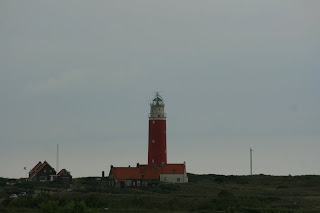


In fact, Texel has 30 km of beach, and from what we saw at the northerly tip of Texel (near De Cocksdorp) the beach is gorgeous - wide and sandy. From the beach though you do see one of the many oil rigs out in the North Sea, but you can also see the next island in the chain off the Dutch coast.


The Wadden Sea is abundant with nature and life - sea birds, seals, fish and little critters on the bottom of the sea, which are evident at low tide and what makes wadlopen so popular. A two year old in a Bugaboo makes wadlopen a little tricky so we visited the wildlife in Ecomare instead...... later in the week there will be a little more on that.

If you want to explore more about Texel (and if you are looking to explore The Netherlands then boat hopping along the islands is a great start) then visit the tourist board site for Texel in English... and for those still practicing their Dutch.....

Tuesday, February 17, 2009

All about Amsterdam... Well Maybe

This is the reason you should not rely on online translation tools to do the job for you:


I quote (because I really could not make this up)

"Explore Amsterdam by foot, tram, supply journeying or bike. Word of warning though with the bikes on a past calculate there are over 400,000 bikes in Amsterdam, if you are a taste wobbly it could be prizewinning to move in digit of the parks."
I think it is saying for the inexperienced, biking in Amsterdam can be daunting and it might be an idea to keep to the parks. However, I cannot be sure.
For the rest, well I challenge you to work it out for yourselves... particularly the paragraph about drugs and prostitution. Happy reading!

Thanks to Planet Germany for this lead which followed from Cathy Dobson's post about Germany from the same site.